Authorized cybersecurity help
Hire a hacker safely for recovery, forensics, and security testing.
Hacker01 helps people and organizations handle hacked accounts, suspicious phones, digital evidence, incident response, and authorized penetration testing without crossing legal lines.
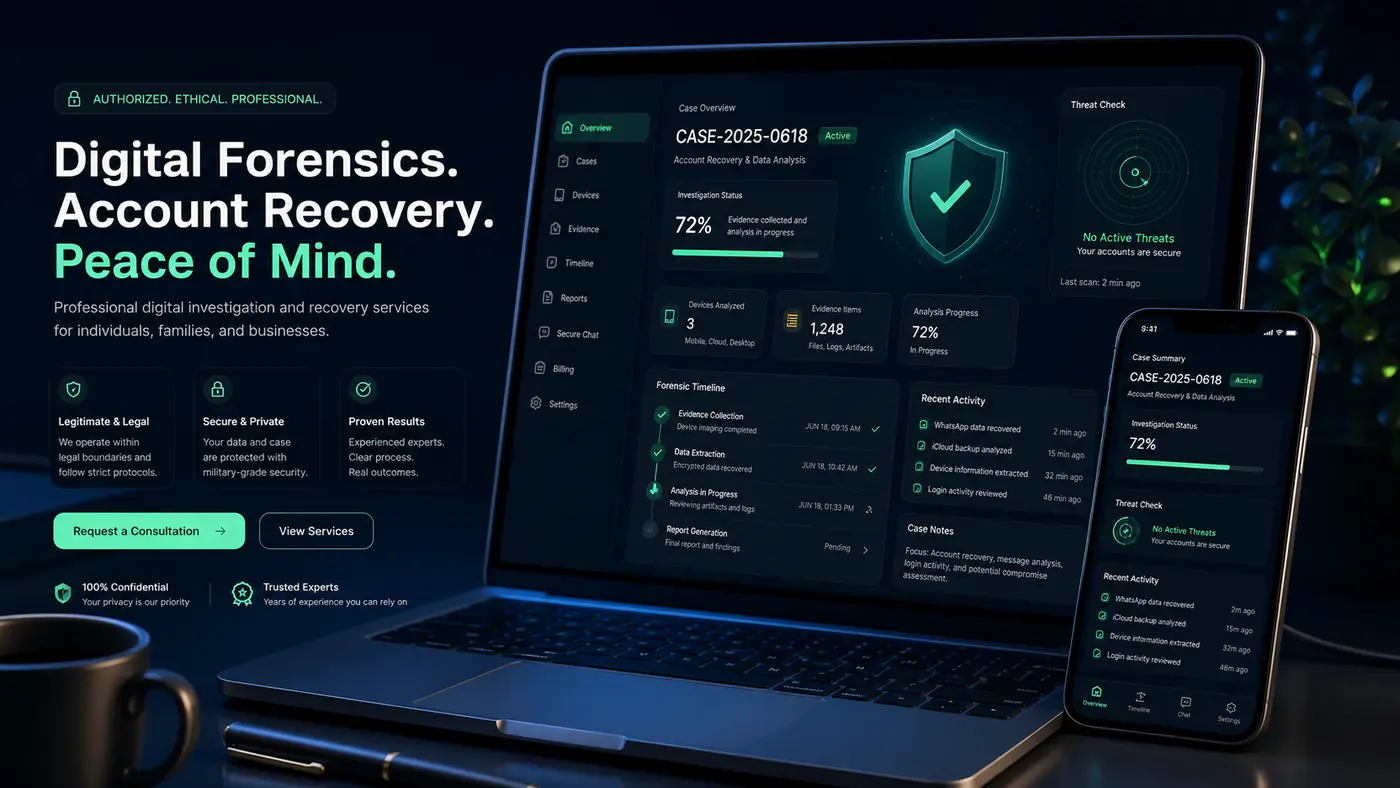
Account, phone, and evidence steps organized before action.
We work on accounts, devices, apps, and systems you own or manage.
What we solve
Real security problems need a calm, legal process.
Searches for hackers for hire often mix legitimate recovery needs with risky promises. Hacker01 is built around authorized work: access recovery, compromise review, evidence preservation, and defensive testing. If you need to hire a hacker, the first question is not what can be broken into. The first question is what you own, control, or have written permission to review.
Account Recovery
Organize safe recovery for email, social media, Apple, Google, WhatsApp, business pages, and admin accounts you own or manage.
Digital Forensics
Review screenshots, device activity, account alerts, logs, and timelines when fraud, compromise, or disputes need documentation.
Phone Security
Check suspicious apps, unknown profiles, connected devices, location sharing, SIM-swap signs, and account recovery settings.
Incident Response
Handle suspicious logins, malware symptoms, unauthorized changes, phishing fallout, and business account compromise.
Penetration Testing
Test websites, apps, APIs, and business systems with written scope and clear reporting for remediation. Plan an authorized penetration test.
Security Hardening
Strengthen MFA, passkeys, recovery methods, admin roles, backups, password hygiene, and monitoring after recovery.
Boundaries
What ethical hackers for hire can and cannot do.
Professional cybersecurity work depends on permission. We accept cases where the client owns, manages, or has written authorization for the asset involved. We refuse requests that would invade another person’s privacy or defeat security controls without consent.
Accepted work
- Recovering accounts you own or manage
- Reviewing your own phone or company-owned device
- Preserving evidence for authorized digital forensics
- Testing a website, app, or system with written scope
- Hardening accounts and devices after compromise
Refused requests
- Breaking into another person’s account or phone
- Reading private messages without consent
- Stalking, spying, blackmail, or revenge requests
- Stealing passwords, one-time codes, or private data
- Bypassing school, banking, workplace, or platform rules
Who it helps
Built for urgent problems where trust matters.
Many visitors arrive after something has already gone wrong. They do not need vague promises or dramatic hacking language. They need a calm path that explains what is possible, what is not allowed, and how to protect the account, device, or business system involved.
Individuals
For people locked out of accounts, worried about phone compromise, dealing with suspicious alerts, or trying to preserve evidence without making risky mistakes.
Business Owners
For teams handling hacked pages, admin account abuse, phishing fallout, website issues, payment fraud concerns, or employee device questions.
Legal and Support Teams
For matters where digital evidence, screenshots, timelines, account logs, or device activity need careful handling before decisions are made.
For the first message, describe the account, device, or system, when the problem started, and what access you still have. Tell us whether you are the owner or an authorized administrator. Do not send passwords, verification codes, identity documents, or unredacted private records through the contact form.
Process
A safer way to hire a hacker.
Anonymous promises are risky. A legitimate process protects you, the provider, and any third party whose data might be involved.
Define
Clarify whether this is recovery, phone security, forensics, incident response, or testing.
Verify
Confirm ownership, authorization, identity, and asset scope before technical work starts.
Scope
Document what is allowed, what is refused, expected output, and evidence handling.
Resolve
Carry out the work within scope, document findings, and recover or secure the asset.
Harden
Close weak recovery paths, improve MFA, remove risky access, and reduce repeat attacks.
Before you commit
Agree on the scope, cost, and output first.
The initial request helps identify the problem and whether authorized help is appropriate. A technical engagement needs a written scope before work starts.
What affects a quote?
The number of accounts or devices, the access still available, the testing environment, the evidence involved, and the urgency all affect the work required. Ask for the included tasks, exclusions, payment terms, and any separate retesting or follow-up charges in writing.
What should the output cover?
Match it to the case: a recovery action plan and unresolved platform steps; a device findings summary and hardening checklist; an evidence inventory and timeline; or a testing report with prioritized findings and remediation guidance. Agree on the format and handover before proceeding.
Account platforms control their recovery decisions. A security assessment also has a defined scope and time window. Neither a recovery request nor a test can guarantee an outcome or prove that every possible issue has been found.
Choose your recovery path
Start with the service that matches your problem.
If you need to hire a hacker safely, choose the path that fits the account, device, or system you are authorized to recover or secure. Each route explains what ethical help can cover, what proof may be required, and which requests should be refused for legal and privacy reasons.
FAQ
Questions before you hire ethical help.
Understand the permission, recovery limits, and information needed before requesting help.
Is it legal to hire a hacker?
Legitimate cybersecurity work requires permission covering the specific assets and activity, and must comply with applicable law and provider rules. Owning one device or account does not authorize access to another person’s private accounts or data.
Can Hacker01 recover my account?
Sometimes. Recovery depends on the platform, recovery email, phone number, trusted devices, identity signals, and what the attacker changed. We help organize safe recovery steps and harden the account afterward.
What makes a hacker for hire legitimate?
A legitimate provider asks for proof of ownership, defines scope in writing, explains limits, protects client data, documents findings, and refuses spying, stalking, theft, or unauthorized access.
What should I prepare before contacting Hacker01?
Describe the account or device, what happened, when it started, what access you still have, and your authority to request help. Do not send passwords, verification codes, identity documents, or unredacted private records in the first message.
Need legitimate cybersecurity help?
If your request is authorized, documented, and legal, Hacker01 can help you choose the safest next step for recovery, forensics, phone security, or testing.