Updated May 3, 2026 | Legal digital evidence guide
For the broader rules around when you can hire a hacker legally, read the main hiring guide before taking action in any relationship or evidence matter.
Hire a Hacker to Catch a Cheating Spouse? Read This Before You Risk Your CaseWhen suspicion turns into panic, the internet makes it sound easy to pay someone for secret phone access. In reality, that choice can expose you to criminal risk, destroy useful evidence, and hurt a divorce, custody, or workplace matter. Here is the safer path.
If you are searching for how to hire a hacker to catch cheating spouse, you are probably trying to answer one painful question: what is really happening, and how can you prove it without making things worse? That question deserves a direct answer. Secretly breaking into a spouse’s phone, email, social media, cloud backups, or messaging apps is not a safe investigation strategy. It can be illegal, unreliable, and easy for a court or attorney to challenge.
This guide explains what people usually mean by “hiring a hacker” in an infidelity situation, why many online offers are dangerous, and which legal alternatives can help you preserve digital evidence. The goal is not to help anyone spy. The goal is to help you avoid mistakes, protect yourself, and use authorized support if you genuinely need technical help.
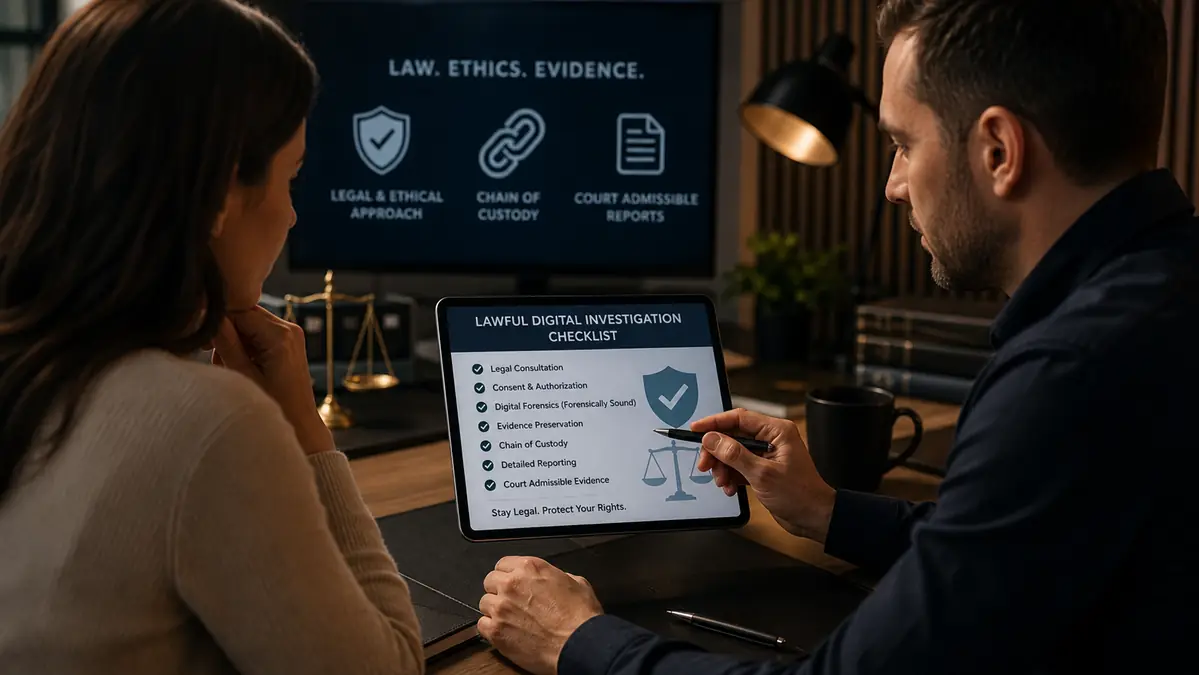
Why “Hire a Hacker” Advice Is Usually Risky
Search results for this topic are full of pages promising hidden access, deleted messages, GPS tracking, WhatsApp monitoring, or social media passwords. Those promises may look attractive when emotions are high, but they are often exactly what creates the biggest legal and practical problems.
In the United States, secret monitoring can raise issues under federal and state privacy, wiretap, computer access, and stalking laws. The FTC has warned about stalkerware and secret monitoring apps. Legal resources such as Cornell’s Wex overview of wiretapping law also show why intercepting communications can create serious exposure.
There is also a proof problem. Even if someone claims they can recover secret messages, you may not be able to show where the data came from, whether it was altered, or whether it was collected legally. Evidence that cannot be authenticated may be useless. Evidence collected unlawfully may damage the person who tried to use it.
Legal Options Before You Hire Anyone
The safest first step is not a hacker. It is a plan. If your concern could become part of a legal dispute, talk to an attorney in your jurisdiction. If you need field investigation, ask about licensed private investigators. If you need technical review of devices or accounts you own or are authorized to access, ask about digital forensics.
| Option | When it helps | What to avoid |
|---|---|---|
| Attorney | Divorce, custody, protective orders, admissibility, evidence strategy. | Acting first and asking legal questions after evidence is already contaminated. |
| Licensed private investigator | Lawful observation, records research, documentation, and jurisdiction-specific investigation. | Unlicensed operators promising phone hacking or secret account access. |
| Digital forensic examiner | Reviewing devices, backups, logs, screenshots, and accounts you are authorized to provide. | Bypassing passwords, breaking into accounts, installing spyware, or accessing another person’s private data. |
| Therapist or mediator | When the issue is relationship clarity rather than court-ready evidence. | Turning emotional uncertainty into unlawful surveillance. |
When Technical Help Might Still Make Sense
There are legitimate situations where technical support is appropriate. For example, you may need help preserving your own phone data, exporting account activity from an account you own, documenting suspicious login alerts, or reviewing a shared business device with proper authorization. In those cases, the service should be framed as digital forensics, account security, or evidence preservation, not secret spying.
The National Institute of Standards and Technology has published guidance on mobile device forensics, including the importance of procedures, preservation, and documentation. NIST’s mobile device forensics guidance is a useful reminder that credible technical work follows a process. It is not just someone sending screenshots from an unknown source.
A legitimate provider should ask for proof of ownership or authorization, define the scope in writing, explain what is legally possible, and refuse requests to hack another person’s phone or account. If a provider says they can secretly monitor anyone, recover any deleted messages, or remain “undetectable,” treat that as a warning sign.
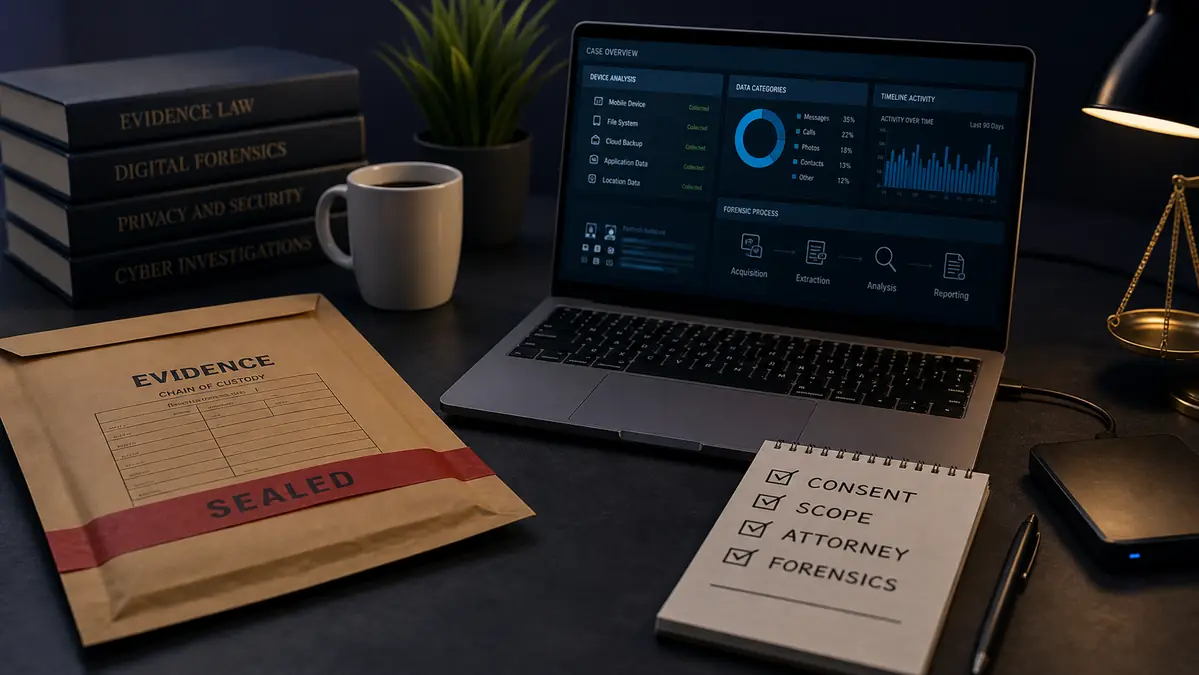
What You Should Not Do
People often search to hire a hacker to catch cheating spouse because they want certainty fast. But speed is not worth it if the method creates legal risk. Avoid the following:
- Do not guess or reset your spouse’s passwords.
- Do not install monitoring apps, keyloggers, spyware, or location trackers.
- Do not pay someone to access WhatsApp, iCloud, Google, Instagram, Facebook, email, or carrier records without authorization.
- Do not impersonate your spouse to customer support, banks, platforms, or telecom companies.
- Do not edit screenshots, crop context out of messages, or delete related material.
- Do not confront someone with evidence if safety is a concern. Get professional help first.
If you already did something risky, stop and speak with an attorney. Do not keep collecting more data while hoping the issue will become easier to explain later.
A Safer Evidence-Preservation Checklist
This checklist is not a substitute for legal advice, but it can help you avoid common mistakes while you arrange proper support.
- Write a timeline. Note dates, times, events, travel, account alerts, financial activity, or communications you personally observed.
- Preserve original files. Keep original screenshots, photos, emails, receipts, and device notifications. Avoid editing them.
- Export your own account records. Many platforms let you download data from accounts you own.
- Record source information. For each item, note where it came from, when you captured it, and who had access.
- Keep a clean copy. Store copies in a secure folder and avoid repeatedly opening or modifying originals.
- Ask before accessing shared devices. Shared ownership does not always mean unlimited legal permission.
- Get professional guidance early. An attorney can tell you what evidence matters and what collection methods to avoid.
Cost and Timeline Expectations
Costs vary because the work can range from a short consultation to a full forensic review. A basic evidence-preservation consultation may be faster and less expensive than imaging and reviewing a device. A formal forensic report takes longer because the examiner needs to document process, findings, limitations, and chain of custody.
Red Flags When Hiring Help Online
The pages ranking for this topic often promise certainty: “catch them today,” “read deleted messages,” or “track any phone.” Those claims should make you cautious. A professional provider will set limits. A scammer will promise whatever you want to hear.
- No written scope of work.
- No identity, company, or contact transparency.
- Payment demanded through irreversible methods only.
- Claims of guaranteed access to any phone or account.
- Refusal to discuss authorization or legality.
- No explanation of evidence handling or reporting.
- Pressure to act immediately before you speak with an attorney.
Related Hacker01 Resources
If your issue is really account compromise, suspicious phone behavior, or device security, these resources may be more relevant than an infidelity investigation page:
- Hire a hacker safely for authorized cybersecurity work
- Phone security and data recovery support
- Is a cell phone hacker a legitimate service?
- Account recovery and breach investigation
- Warning signs your phone might be hacked
- Digital forensic investigation retainer
Conclusion
You can search for ways to hire a hacker to catch cheating spouse, but the better question is whether the method will protect you, your case, and the evidence. Secret access usually creates more risk than clarity. A safer path starts with legal advice, careful preservation, and authorized digital forensics when technical review is appropriate.
Need Authorized Digital Evidence Help?
Hacker01 can help with lawful account security, device review, evidence preservation guidance, and digital forensic investigation where you have proper authorization. We do not provide secret spying, password theft, or unauthorized account access.
Request a Legal-Scope ConsultationFAQs
Can I legally hire a hacker to catch a cheating spouse?
You may be able to hire authorized digital forensics or investigation support, but secretly accessing another person’s phone, email, social media, or cloud account can be illegal. Speak with an attorney before collecting evidence for a legal dispute.
What is the safest first step if I suspect cheating?
Write a timeline, preserve evidence you already lawfully have, avoid logging into private accounts, and speak with an attorney or licensed investigator if the matter may affect divorce, custody, or safety.
Can digital forensics recover deleted messages?
Sometimes, but only from devices, accounts, or backups that can be reviewed lawfully. A credible examiner will not promise recovery from any phone or account, and will explain authorization, technical limits, and evidence handling.
Is spyware or stalkerware a good way to catch cheating?
No. Secret monitoring software can create legal, safety, privacy, and evidence problems. It is also commonly used by scammers and abusers. Use legal evidence-preservation and investigation channels instead.