Updated May 3, 2026 | Authorized mobile security help
If you are deciding whether phone support needs a specialist, use the safe hacker hiring guide to check scope, authority, and provider red flags.
Hire a Hacker for Cell Phone Help? What Is Legal, What Is a Scam, and What to Do InsteadPhone problems can feel urgent: lost data, suspicious login alerts, spyware concerns, deleted evidence, or a locked account. But paying a stranger to break into a phone can create legal and security trouble. Here is how to separate legitimate mobile forensics from dangerous phone hacking offers.
If you searched for hire a hacker for cell phone, you may be trying to solve a real problem. Maybe your phone was compromised. Maybe you need to recover data from a device you own. Maybe an employee device needs investigation. Or maybe you saw a “cell phone hacker for hire” page promising remote access to any phone. The difference between those situations matters.
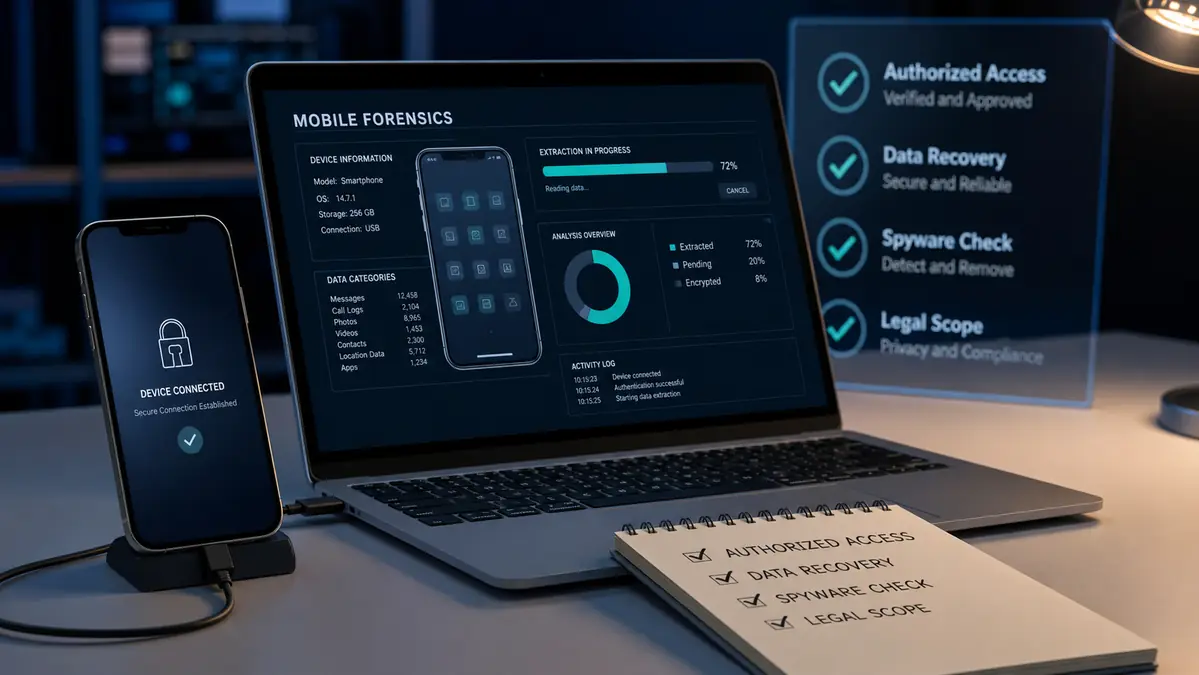
A legitimate service can help with authorized recovery, mobile device security, spyware checks, account protection, and digital forensics. It should not help you secretly access another person’s phone, bypass passwords, monitor messages, track location, or defeat carrier and platform security controls. That line is important for search engines, for your safety, and for any evidence you may need to rely on later.
What People Usually Need When They Search This
The phrase hire a hacker for cell phone can mean very different things. Some people need legal help recovering data from their own device. Some are worried about spyware, account compromise, or suspicious phone behavior. Others are looking for someone who can access another person’s private phone, which is where the risk begins.
If your goal is recovery, security, or forensics on a device you own or are authorized to manage, professional help may be appropriate. If your goal is to secretly read messages, track location, bypass a lock screen, or monitor someone else, that is not a legitimate service request. A trustworthy provider should make that difference clear before taking payment.
This guide focuses on the safe path: what authorized cell phone security help can include, what warning signs suggest a scam, and what steps you can take before hiring anyone.
When Cell Phone Security Help Can Be Legitimate
There are real reasons someone might need expert phone help. A legitimate provider can support you when you own the device, manage the account, represent the business that issued the device, or have written authorization from the person or organization responsible for it.
Forensics is process-driven work. NIST’s mobile device forensics guidance emphasizes method, handling, and documentation. That is very different from a stranger claiming they can remotely read any phone without permission.
What Is Not a Legitimate Phone Hacking Service
Some services ranking for “phone hacking services,” “cell phone hacker for hire,” or “hire a cell phone hacker” promise secret access. Those offers can expose you to scams, malware, extortion, and legal problems.
Do not hire anyone to:
- Break into another person’s phone, email, cloud backup, or social media account.
- Install stalkerware, spyware, keyloggers, or hidden tracking tools.
- Bypass screen locks on a phone you do not own or control.
- Intercept calls, text messages, WhatsApp, iMessage, or carrier records without authorization.
- Sell deleted messages from someone else’s device.
- Guarantee remote access to any phone number.
The FTC has warned about stalkerware and secret monitoring apps. If a provider’s pitch sounds like hidden surveillance, it is not the kind of help you should use.
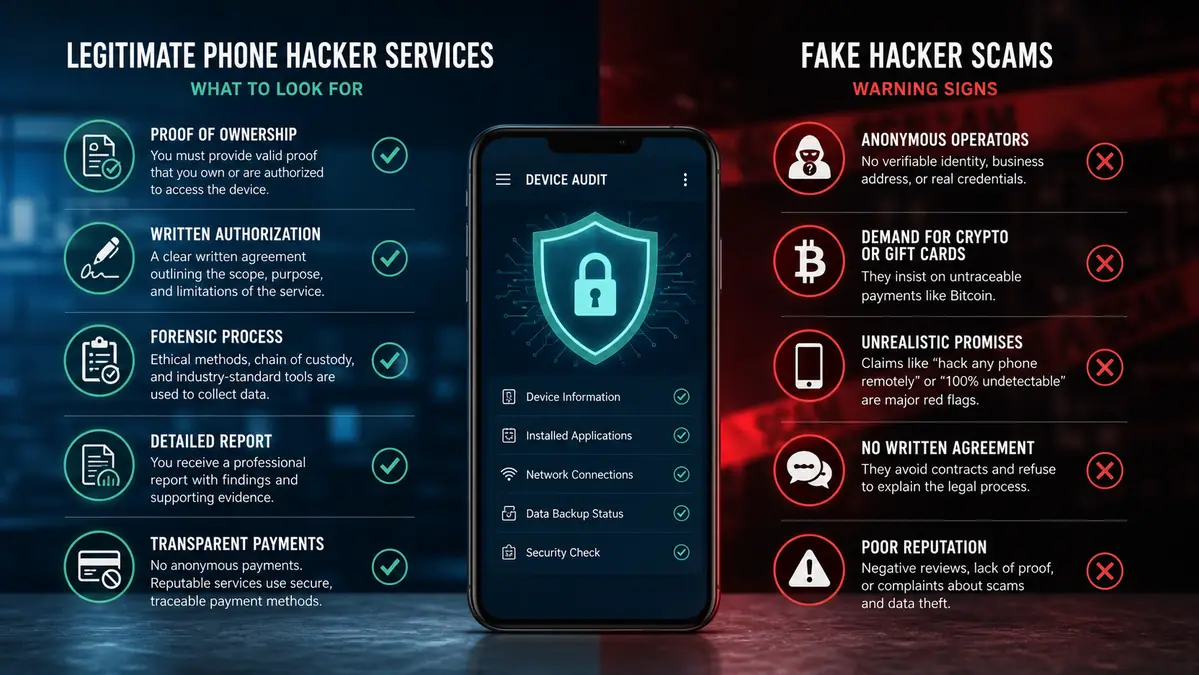
Legitimate Mobile Help vs Phone Hacking Scams
| Question | Legitimate provider | Risky provider |
|---|---|---|
| Do they ask for proof? | Yes. They ask for ownership, authorization, business policy, or written scope. | No. They say they can access any phone with just a number or username. |
| Do they explain limits? | Yes. They explain what can and cannot be recovered or reviewed. | No. They guarantee deleted messages, live tracking, or total access. |
| How do they handle evidence? | They document sources, timestamps, methods, and chain of custody when needed. | They send screenshots or claims without explaining where data came from. |
| How do they discuss legality? | They refuse unauthorized access and recommend legal guidance when needed. | They avoid legal questions or say they are “undetectable.” |
Steps to Take Before You Hire Anyone
Before you hire mobile phone security help, take basic safety steps. These may solve the issue or make the later review cleaner.
- Secure your accounts. Change passwords from a clean device, enable two-factor authentication, and review recovery email and phone numbers.
- Check account activity. Review Apple ID, Google, email, social media, and banking login history where available.
- Update the phone. Install operating system and app updates from official stores only.
- Review device settings. Check unknown profiles, device management, location sharing, forwarding rules, and connected devices.
- Preserve evidence. Save screenshots of alerts, timestamps, unusual messages, and suspicious login notices without editing them.
- Avoid factory reset too early. Resetting may remove evidence a forensic examiner could review.
- Talk to an attorney if another person’s device is involved. Shared use does not always mean permission to inspect everything.
How to Vet a Legitimate Provider
A safer provider will slow the process down enough to protect you. That may feel frustrating, but it is a good sign. Ask these questions before paying:
- What proof of ownership or authorization do you require?
- What exactly is in scope and out of scope?
- Will you provide a written summary or forensic report?
- How do you protect client data?
- What are realistic outcomes and technical limits?
- Do you refuse unauthorized phone access requests?
- Can you explain pricing before work begins?
If the provider cannot answer clearly, keep looking. If they ask for payment before scope, proof, or limits, be careful. If they offer to hack someone else’s phone, leave.
Costs, Timing, and Realistic Expectations
Costs depend on the device, operating system, data source, urgency, and whether you need a formal report. A short security consultation is different from a forensic examination of a device, cloud backup, or business phone. Recovery may be possible in some cases and impossible in others.
Expect a legitimate provider to explain the process before claiming results. For example, a phone compromise review may include account security checks, app and profile review, device settings review, cloud account review, and a short findings report. A formal forensic case may require stricter evidence handling, longer timelines, and attorney coordination.
Related Hacker01 Resources
If your issue is phone security, account recovery, or digital evidence, these related pages can help you choose the right next step:
- Hire a phone hacker for authorized data recovery and security help
- Hire a hacker safely for authorized cybersecurity work
- Hire a hacker to recover an account
- 10 warning signs your phone might be hacked
- Digital forensic investigation retainer
- Contact Hacker01 for authorized help
Conclusion
The phrase hire a hacker for cell phone can point to either a legitimate need or a dangerous request. If you need help with a phone you own, an account you control, or a business device you are authorized to review, mobile forensics and security support may be appropriate. If the goal is secret access to another person’s private phone, do not proceed.
The safest path is clear: define your problem, preserve evidence, secure your accounts, confirm authorization, and work only with providers who refuse illegal phone hacking.
Need Authorized Cell Phone Security Help?
Hacker01 can help with lawful phone security checks, data recovery guidance, account protection, and digital forensic review where you have proper authorization. We do not provide secret spying, password theft, or unauthorized phone access.
Request a Legal-Scope ConsultationFAQs
Can I legally hire a hacker for cell phone recovery?
You can hire authorized help for a phone you own or are permitted to manage. You should not hire anyone to break into another person’s phone, account, messages, or cloud data.
Are phone hacking services real?
Some legitimate services offer mobile forensics, data recovery, spyware checks, and account security. Services promising secret access to any phone are usually unsafe, illegal, or scams.
What should I do if I think my phone was hacked?
Update your phone, change account passwords from a clean device, enable two-factor authentication, review connected devices, preserve suspicious alerts, and seek authorized security help if needed.
Can someone recover deleted messages from my phone?
Sometimes recovery is possible from backups, device storage, or account exports, but it depends on the device, app, encryption, time passed, and legal authorization. No credible provider should guarantee recovery in every case.
Related Checks Before You Request Help
Before you request cell phone security help, separate ordinary phone problems from signs of real compromise. Battery drain, heat, or slow performance are weak signals on their own. The stronger evidence is unknown apps, risky permissions, SIM changes, unfamiliar trusted devices, unexpected MFA codes, or account alerts tied to the phone.
Start with phone hacked warning signs, then review phone number hacking risks if your SIM, calls, or text codes changed. If the device is an iPhone or Android, compare iPhone hacked checks and Android hacked checks. If you need one authorized route, use the homepage to hire a hacker for phone security.
Those supporting guides help users arrive with a clearer story: what changed, when it started, which accounts were affected, and whether the device or number is still at risk. That context makes the service request more useful.
It also gives search engines a stronger topical bridge between phone symptoms, mobile forensics, account safety, and the main hire-a-hacker service.